

Driving Dys Topia
A Throwback Writing Article

Originally published at the Mad Genius Club On June 23, 2018. Only slightly prescient, looking back at it through the covidiocy era lens.
I’m not a fan of doom and gloom. My daughter and I were having a conversation about song lyrics after seeing a pithy sign that reminded us of poetry, and that segued into stories. She informed me she likes melancholy ‘edgy’ music and reading. I said, as I parked and got out of the car, “I’ve lived on the edge. I much prefer happy-go-lucky.”
I really do. I’m not all glitter and giggles, but when I am reading, I don’t want to be repulsed by the level of pain, gore, and emo-angst-nihilism. I had a moment, the other day, reading Nevil Shute’s The Far Country (I couldn’t resist it after Dave Freer’s enthusiasm over it the other day here), where I was figuratively holding my hands over my face and peeking through my fingers at the story unraveling on my phone screen (where I read most, these days). Don’t do it, I was muttering, oh, please don’t do it!
There was a point in the story where it could easily have gone in a very dark direction. I could play the coming scene out in my head - and the only thing I knew about Shute was that he’d written On the Beach, an end of the world story where everyone dies. So I was wondering if this new-to-me author would play out the plot in the same way I knew he could and I was really hoping he wouldn’t. He didn’t. I won’t spoil the story, but I loved it, and came away at the end determined to read more of his... but not the story where everyone dies. I won’t do that to myself. It’s not that I can’t handle it, and I’m sure it’s beautifully and tragically written and all that. It’s that I don’t want to subject myself to it. I’ve lived on the edge of life. I don’t want to go back there in my entertainment, and there are beautifully written things that have hope in the kernel of their endings.
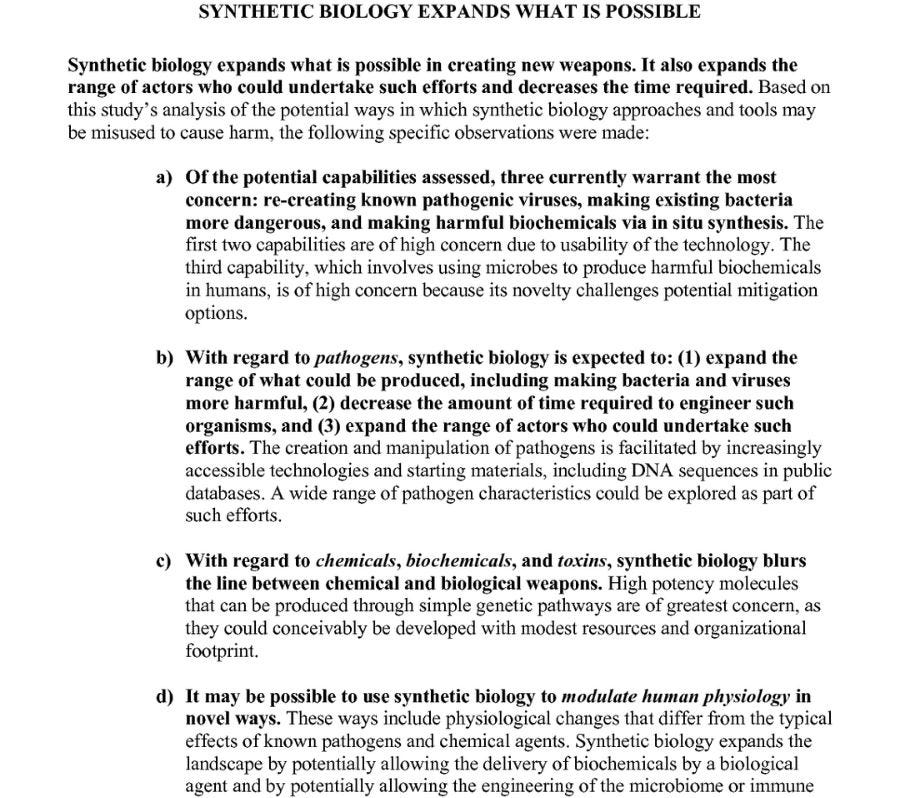
The trouble is, I look at my science journals and see that we could well be trembling on the brink of a dystopia. I’m too level-headed to think the kind of ‘topia’ in our future is a utopia. And I’m not too sure that dys is coming, either. More than likely, life will find a way. But clever people with agendas might just put some very nasty speed bumps on the road as we’re driving toward ‘topia.’ Like CRISPR and gene editing, and biochemistry gone wrong.
For the short version on the perils inherent in synthetic biology, check out this article in C&EN. They are discussing a recent report commissioned by the US government on chemical and biological warfare, and the role synthetic biology could play in it during upcoming conflicts. Humans are very, very creative in waging war. While in years past, the government was more inclined to scoff at the danger, this report changes all that, and it’s a wave of chilling knowledge. It’s also invaluable to a writer who wants to research and possibly employ some real, hard, science in their tale. You can find the whole report here, free of charge in PDF or HTML form.
Am I looking over my shoulder now? No. Nor am I planning on writing a dystopian post-apocalyptic tome. I like hope, and I live with hope. The thing that got my daughter and I started was on our conversation was a sign:
Live!
Before you
Die
How edgy, she said. Reminds me of the Art of Dying, I responded.
So I’ll leave you with my favorites of their songs. Perhaps they’ll inspire you, the way they do me, to live even when it’s dark and dystopian outside.
I read 'On The Beach' and after reading it I'll never touch another book of his.
Not ever. Because not only was it such incredible propaganda (I wonder if the USSR paid him for that one? And if so, how much) but it was also just such utter bullshit.
I got so tired of all the Soviet anti-war propaganda we were *forced* to sit through in public school as a teenager. On the Beach was one of them. That stupid commie 'Fail Safe' starring commie Henry Fonda (I like him as an actor but I'll never forgive him that propaganda piece) I do wonder just how much the soviets paid for that piece of trash to be made.
Dr. Strangelove had more science and more accuracy that either of those stories (and even then, it wasn't much).
The fact that 40 plus years later I'm still pissed I was forced to read and sit through those stories by teachers who were all commies or morons shows just how much it all pissed me off.
I'm sure I read Shute's On The Beach in '59 (Much of my university years not spent in far less justifiable endeavors was spent in the library stacks.) but it's the movie version I saw that year that I remember.
A student then at the University of Florida, following my watch of the movie, I convinced some friends to help me make a thirty or so foot long 'There's Still Time Brother' banner out of butcher's paper. In the dead of night we hung it in the University's Plaza of the Americas. Oddly enough it held up and hung there for a couple of weeks without the university's grounds staff or the weather taking it down.