

What's Blooming?
A Walk in the Mid-May Garden

I am not a gentle gardener. I have a habit built over years of limited time and energy of putting a plant in the ground and seeing what happens, sometimes even forgetting completely about it until suddenly it does something like blooming and catches me by surprise.
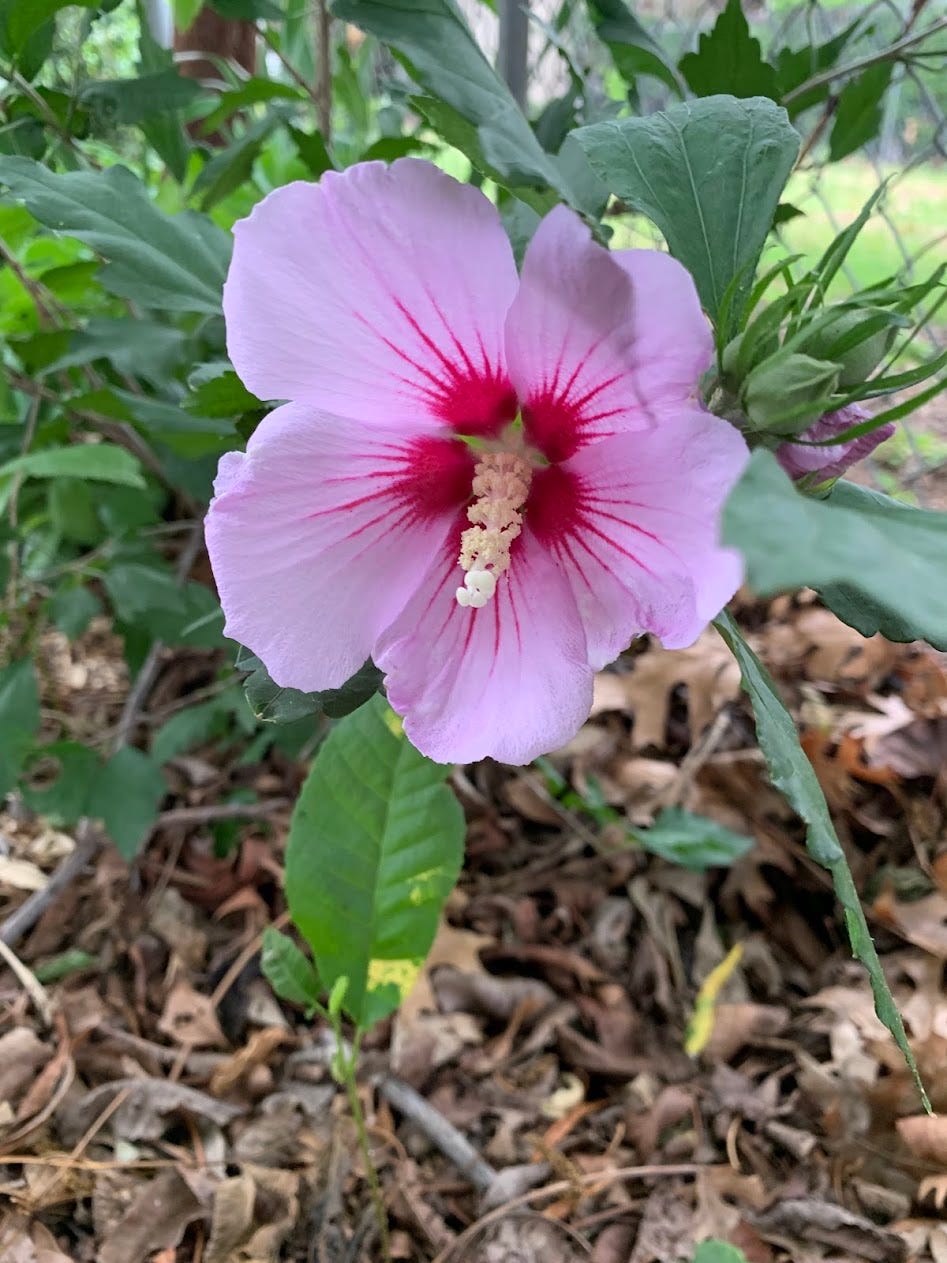
I planted one of those little twig-inna-box bushes two springs ago (so this it its third year) and this year the Rose of Sharon bloomed! I had almost forgotten it was there, as I’d planted it at the back of the property in what I’m slowly making into a shaded woodland garden. Not ideal for a Rose of Sharon, which are in the same family as Hibiscus and Marshmallow, but it is covered in buds and blooms. The blooms are about four inches across, large for this shrub, and that may be due to the shaded location. It gets some sun, but only perhaps four hours a day.
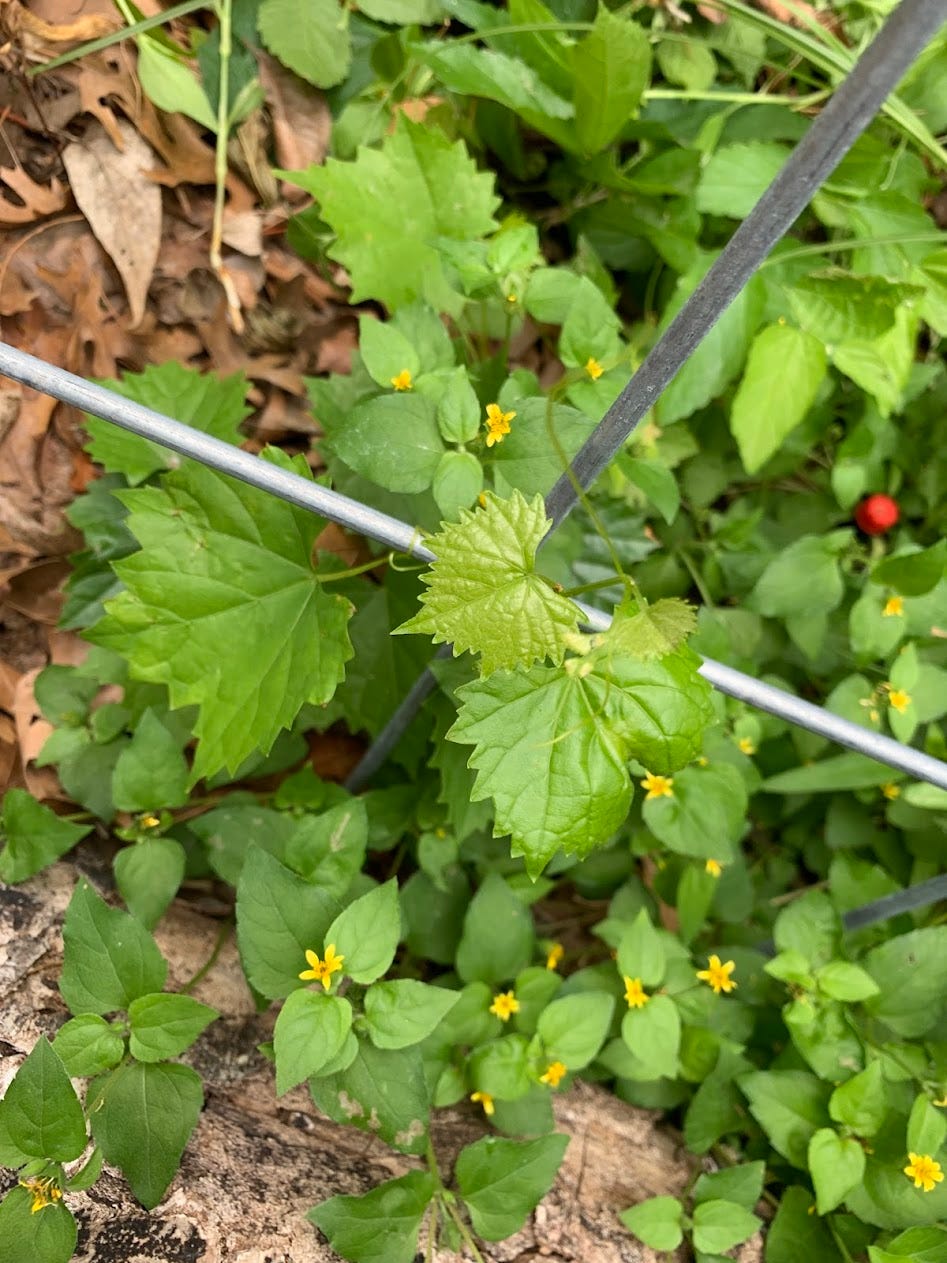
At the other end of that small garden section is the gate into the alley, which I covered with an arch this spring. On each side of the arch I planted a muscadine grape. I’ve tried these grapes before elsewhere in my garden, and they died as I didn’t water them enough and they like water. So you will see the wee grape leaves above, surrounded by the groundcover1 Horseherb, with it’s small yellow flowers, and in the far upper right, that red thing is a drip emitter. We shall see if that helps. I don’t know that I Need more grapes, but they do grow very well here once established. I think I’m going to have to learn how to make wine.
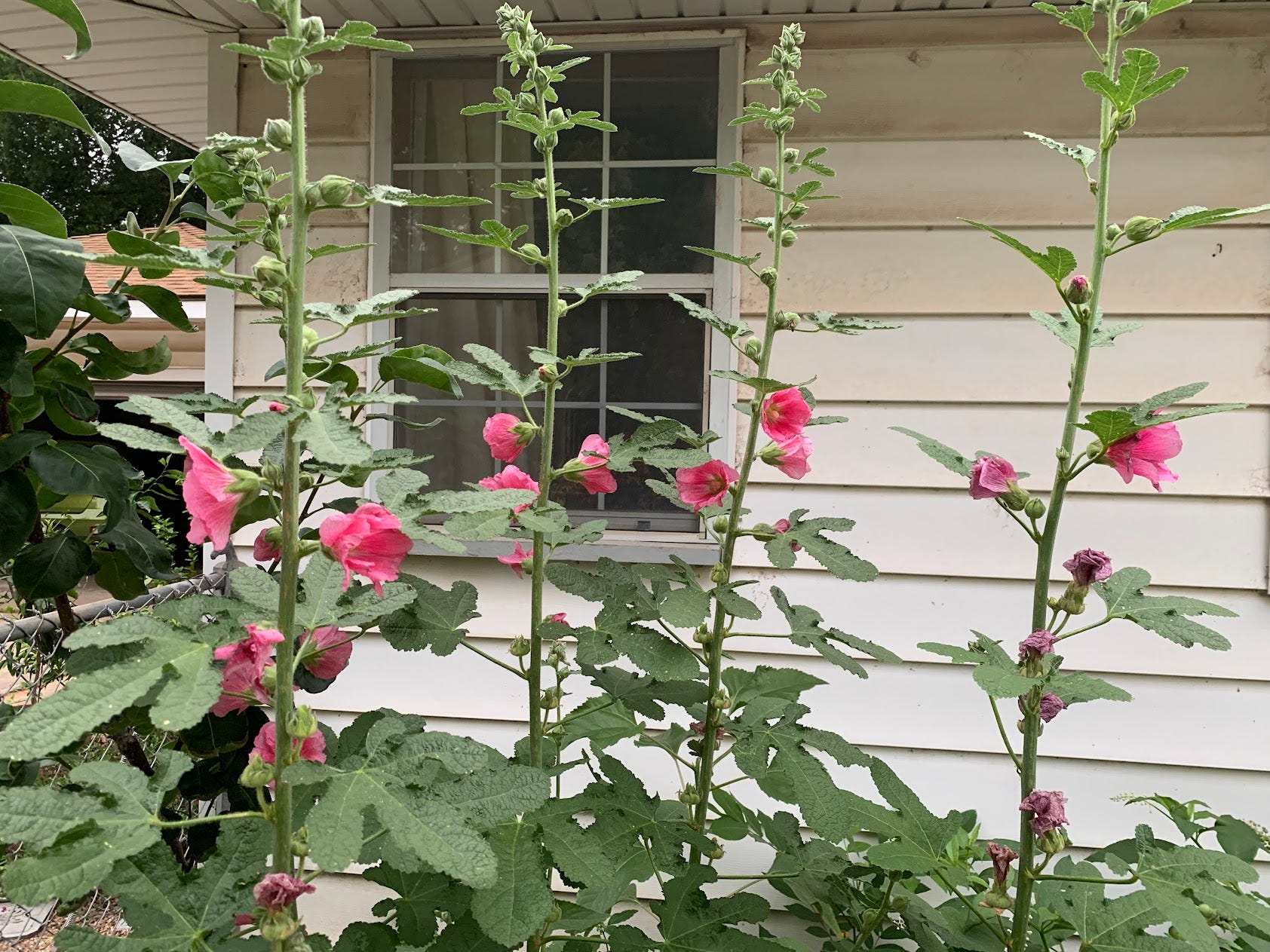
Last year a section of the long bed on the east side of the house got worked up as we pulled out a couple of big old shrubs and a weed mulberry tree. I then sowed it with ‘wildflower’ seed packets, which led to some interesting annuals last year, and this year the biennial Hollyhocks are dominating the space. I’m both delighted to have these tall beauties giving some privacy screen to the house2 and noting that they illustrate the issues with most ‘wildflower’ mixes. If you stop and look at the flowers they include, most are actually native to this continent. Hollyhock were bred to beauty in China, transported via the Middle East to England with the Crusaders, and finally to the New World by homesick ladies craving their gardens just like home. If you truly want wildflowers to thrive in your area, order from a local source that is including only natives to your area (Cosmos, for example, originally grew in Mexico and Southwest corner of the US, but are now scattered across the continent into habitats far beyond, courtesy of gardeners). This is particularly important if you plant to ‘help the pollinators’ because many native bees are picky!
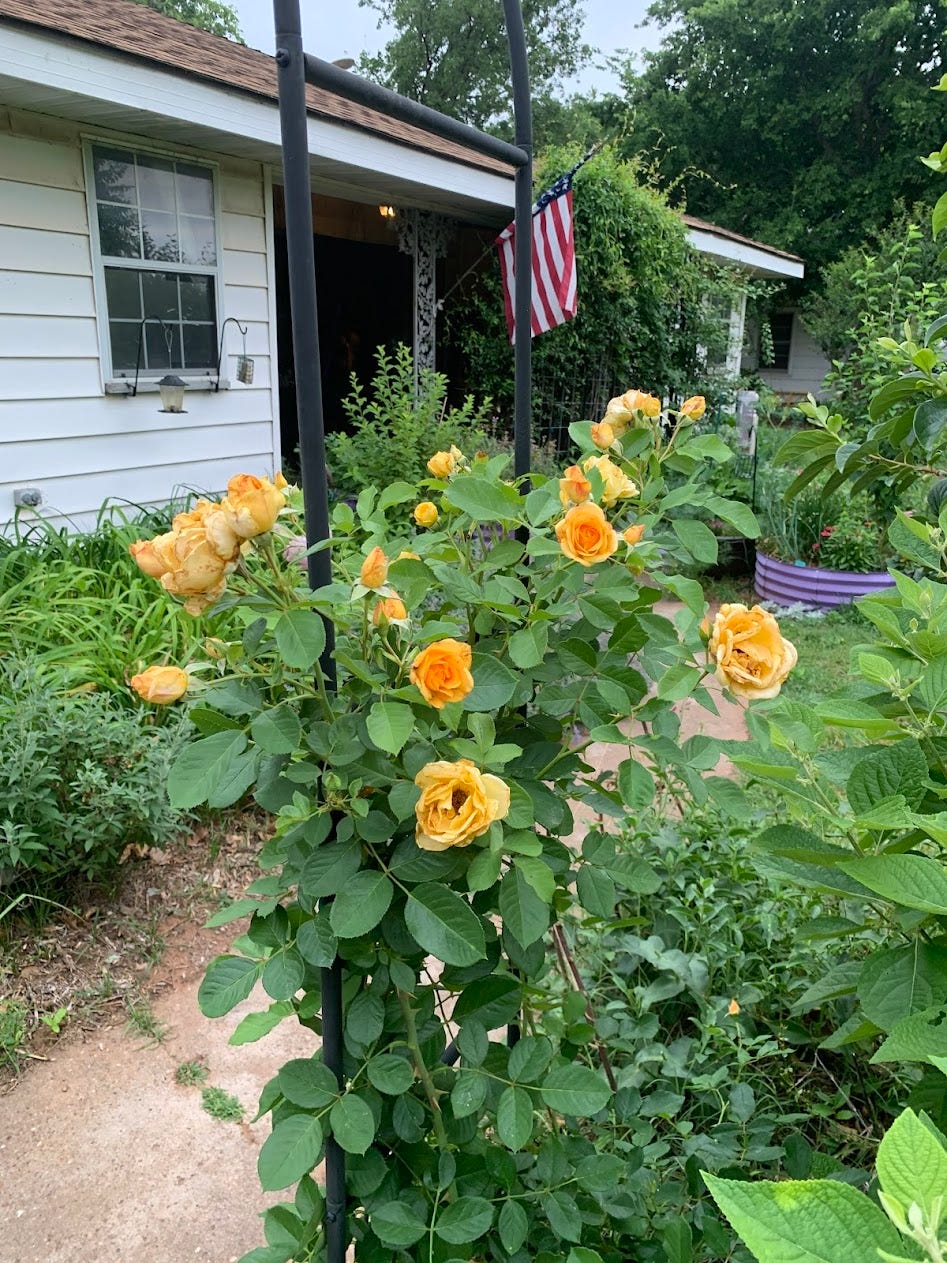
The yellow rose on the arbor, whose name I can’t recall (I really need to start tagging plants with more durable plant stakes) continues to bloom heavily in spite of a thrip infestation. I’ve been spraying it with a very dilute castile soap solution which is helping. I love that the rose is right at nose-height so every time I can walk by it there’s a lovely scent.
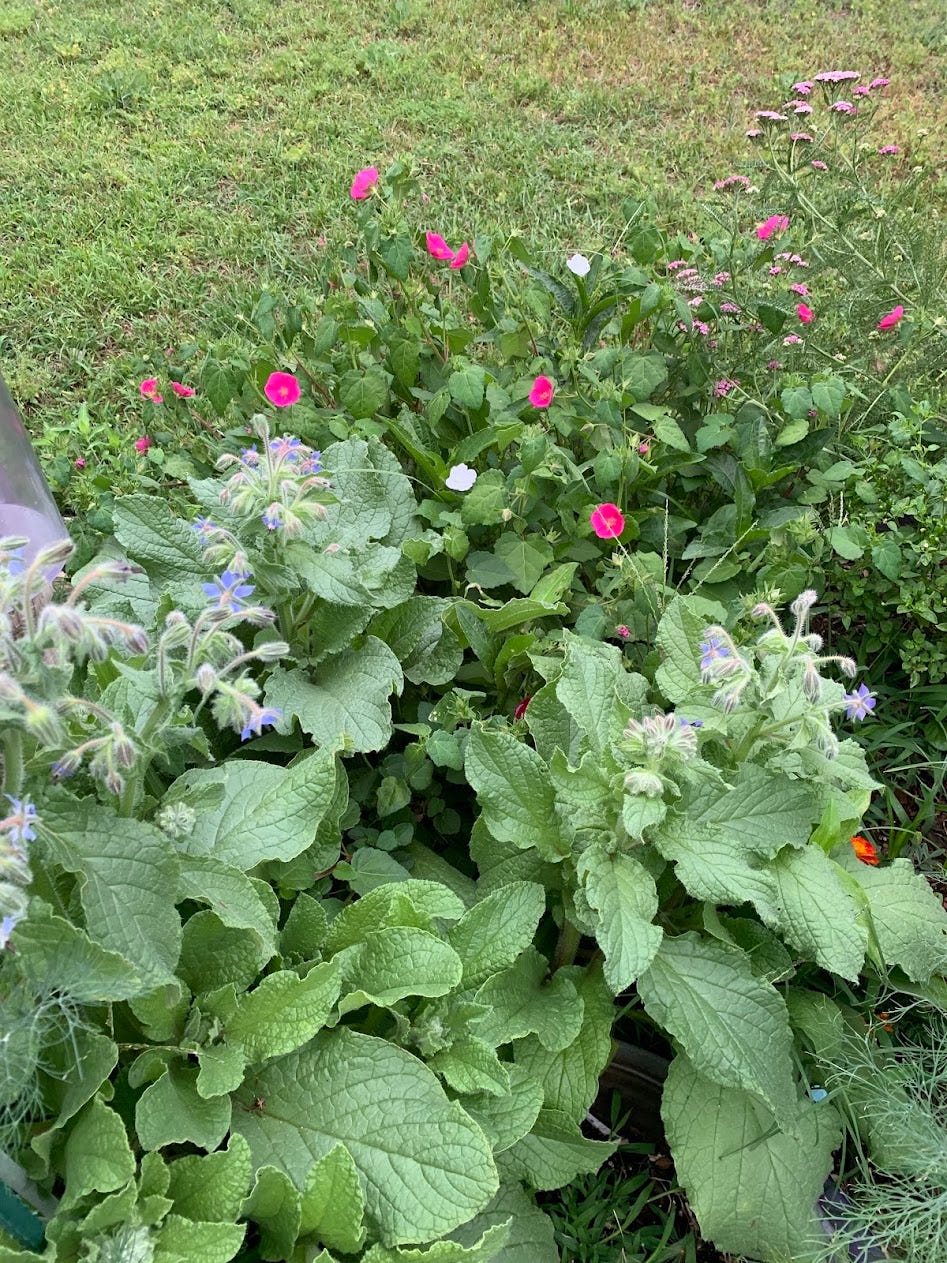
I’m pleased with the cottage-garden vibe of the front flower bed right now. This is a mix of annuals and perennials, herbs and flowers.
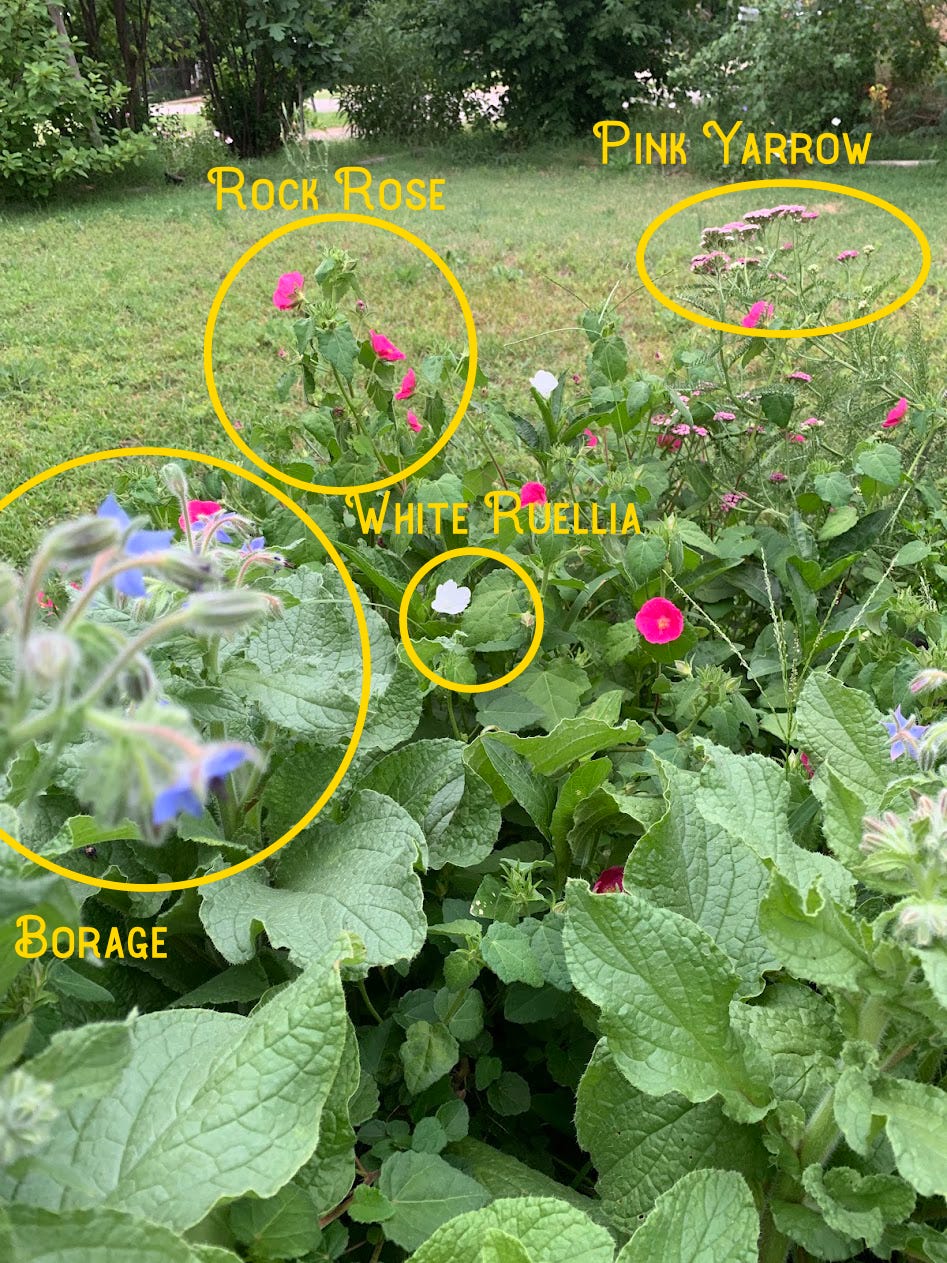
The Rock Rose is a perennial, and in the same family as that Rose of Sharon, with the mallows. Same family as Hollyhock for that matter, I plant a lot of mallow kin as they thrive in my alkaline soil. The Borage is getting huge just here because it is getting water from the drip, elsewhere not on the drip the Borage are about half the size. Their blue flowers are edible and make a lovely garnish in lemonade or other drinks. Borage is a reseeding annual, so hopefully it will come back year after year, I have it in a place that is hard to reach, so tended to get weedy later in the season.
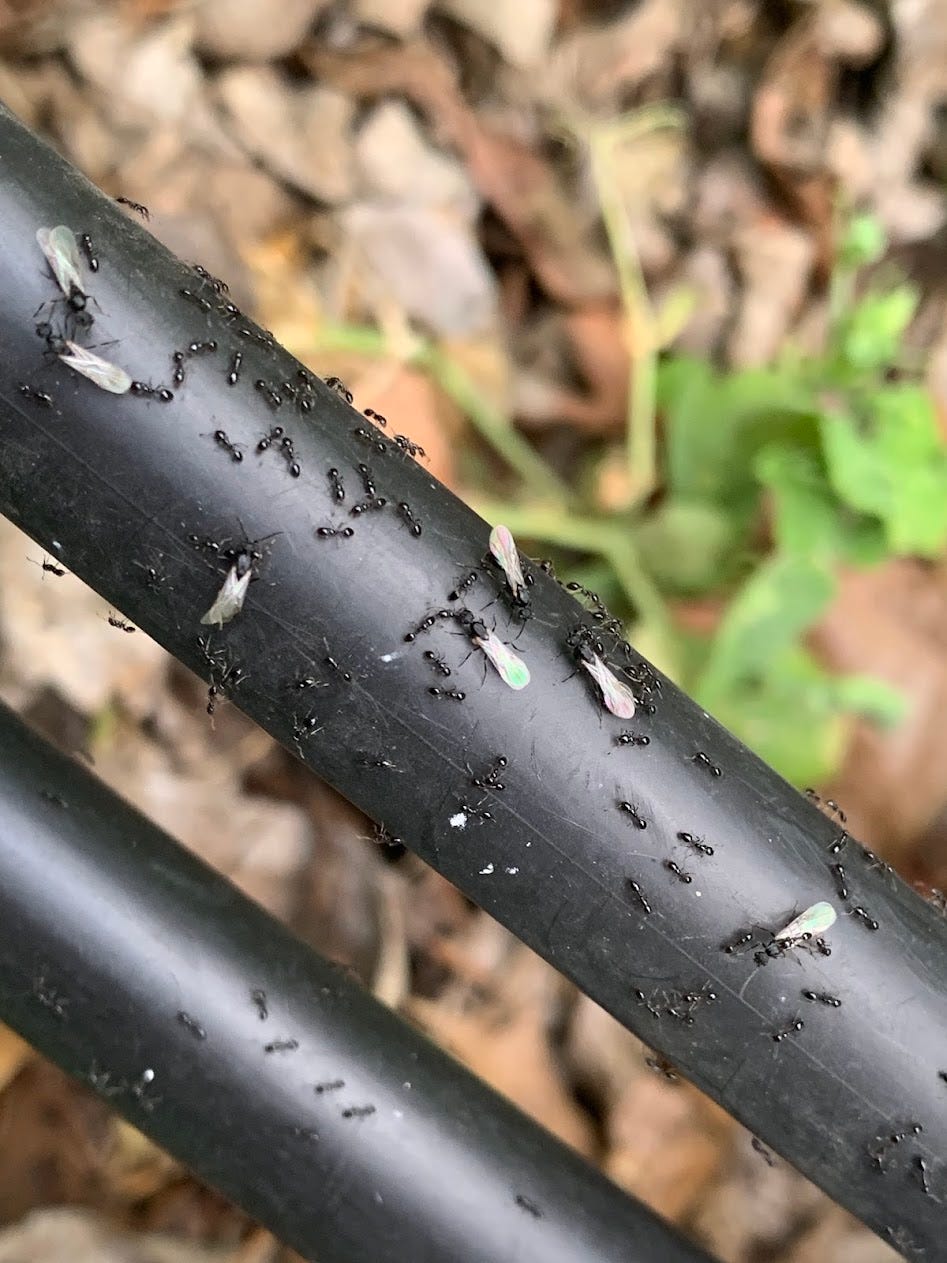
And in the curious events of the garden category, I stopped to watch a Minimum Ant colony conduct it’s Princesses and Princes above ground for their mating flight. These are tiny black ants — for scale, that’s a 1/2” main line for my drip irrigation they are using for a superhighway — and I don’t mind them at all in my garden. Fire ants I will fight. Usually you barely notice these tiny ants, but when they swarm out in the thousands like this they do catch the eye!
I use a lot of groundcovers as living mulches, to help shade the soil and retain moisture in it. Also, pretty!
Hollyhocks used to be planted around outhouses to shield the ‘necessary’ from the eyes of the house and visitors. They reseed prolifically so you could have a beautiful and somewhat shaded bathroom.
Lovely pictures. Thanks.
I spend a lot of time staring at my yard and trying to decide what to plant 😆. This post is very inspirational and gave me new ideas! I threw a few bags of mixed wildflower seeds around my yard a month ago but nothing is growing. I think we've had too much rain and the seeds washed away.